

System Design Concepts: A Beginner’s Guide to Building Scalable Systems

Every day, billions of people use applications like Instagram, YouTube, and WhatsApp. But have you ever wondered: How do these systems handle millions of requests per second without breaking down?
That’s where System Design comes in. It’s the art of designing software systems that are scalable, reliable, and maintainable. Whether you’re a backend engineer, an aspiring architect, or preparing for interviews — understanding system design is essential.
In this post, we’ll break down core system design concepts that every developer should know.
⚡ 1. Scalability
Scalability is the ability of a system to handle increasing traffic or data without performance loss.
Vertical Scaling (Scale Up): Add more power (CPU, RAM) to one machine.
Example: Upgrading your laptop.Horizontal Scaling (Scale Out): Add more servers to share the load.
Example: Instead of one powerful server, use 10 moderate servers.
👉 Most modern systems use horizontal scaling + load balancing.
⚡ 2. Load Balancers
A load balancer distributes incoming requests across multiple servers so no single server is overwhelmed.
Prevents downtime if one server fails.
Improves performance by spreading load.
Common tools: NGINX, HAProxy, AWS ELB.
Analogy: Think of it as a receptionist redirecting customers to different counters in a bank.

⚡ 3. Caching
Caching stores frequently accessed data in memory for faster retrieval.
Client-side cache: Browser stores static files (CSS, images).
Server-side cache: Systems like Redis, Memcached.
CDN (Content Delivery Network): Global servers caching static content near users.
👉 Without caching, every request would hit the database → slow & expensive.

⚡ 4. Databases (SQL vs NoSQL)
Choosing the right database is critical.
SQL (Relational): Structured, supports complex queries. Example: PostgreSQL, MySQL.
NoSQL (Non-Relational): Flexible, scalable, great for big data. Example: MongoDB, Cassandra.
👉 Many real systems use a polyglot persistence approach (mix of both).
⚡ 5. CAP Theorem
The CAP Theorem says a distributed system can only guarantee 2 of 3:
Consistency (C): Every user sees the same data.
Availability (A): The system is always up.
Partition Tolerance (P): System works even if network fails.
👉 You can’t have all three at once. Example:
Banking systems prioritize Consistency.
Social media prioritizes Availability.

⚡ 6. Message Queues & Asynchronous Processing
When systems grow, not all tasks should be done instantly.
Use message queues (Kafka, RabbitMQ, SQS) to handle background tasks.
Example: When you upload a photo → app saves it instantly, but processing (compression, thumbnail creation) happens in background.
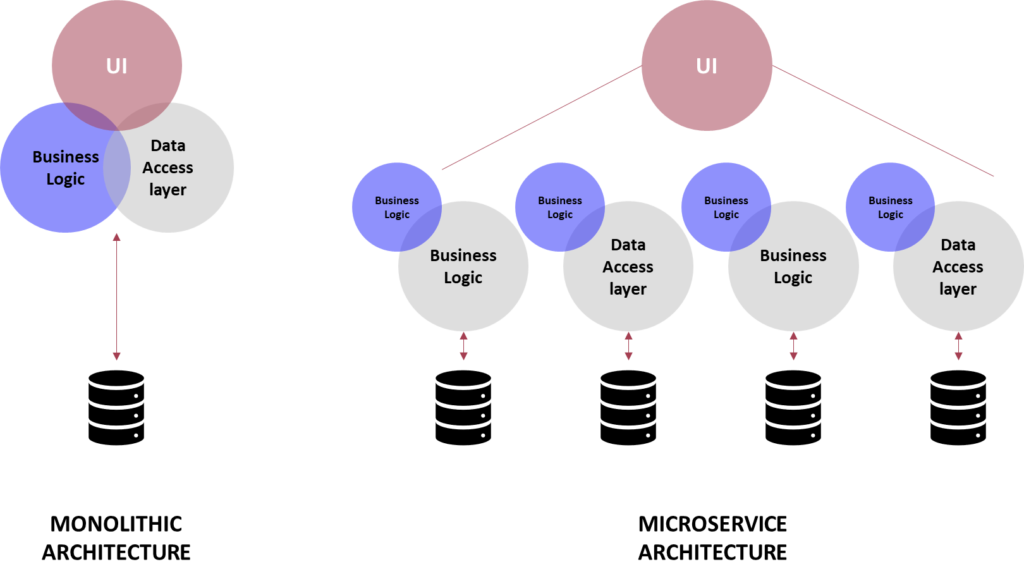
⚡ 7. Microservices vs Monoliths
Monolith: One big codebase, tightly coupled.
Microservices: System split into small, independent services communicating via APIs.
👉 Microservices = more scalable, but harder to manage. Monolith = simple, but not flexible at scale.
⚡ 8. Observability & Reliability
A great system isn’t just about handling scale — it must be reliable.
Logging: Track system activity.
Monitoring: Detect failures (Prometheus, Grafana).
Fault Tolerance: Replication, failover strategies.
✅ Conclusion
System Design is not about memorizing patterns — it’s about trade-offs.
Want consistency? You may lose availability.
Want speed? You may need more storage.
By mastering concepts like scalability, caching, load balancing, databases, and microservices, you’ll be able to design systems that can scale from 10 users to 10 million.